

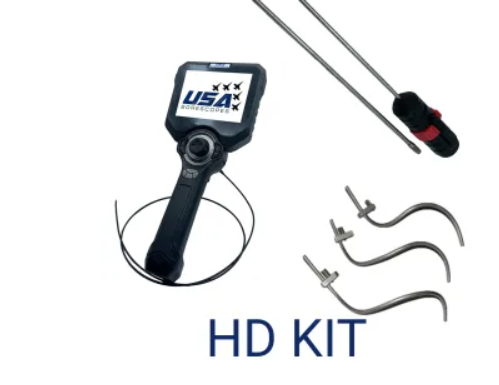
Engine inspections are full of almost moments. You can almost see the edge of a nick on a turbine blade. You can almost tell whether a pit is shallow surface damage or something that’s starting to bite deeper. And you can almost compare today’s indication to the last shop visit; until you realize the camera angle is slightly different, the lighting isn’t identical, and the image is still just a 2D view of a 3D surface.
That’s the gap 3D measurement videoscopes are designed to close. They don’t just show what’s happening inside hard-to-reach areas; they help technicians capture usable depth information and turn internal surfaces into measurable, shareable data. For teams evaluating inspection tools, USA Borescopes is often part of that conversation because they support measurement-focused inspection workflows across multiple industries and applications.
What 3D Measurement Means in Remote Visual Inspection
Traditional videoscopes are powerful visual tools, but they’re still limited by perspective. A photo can make a shallow pit look severe. A crack can appear longer or shorter depending on how the probe is positioned. Even a highly experienced technician can have trouble communicating severity when the only evidence is a screenshot and a written note.
3D measurement adds a key layer: depth-aware information. Instead of relying solely on pixel distance and subjective interpretation, 3D measurement videoscopes estimate the geometry of the surface being viewed. That makes it possible to:
- Measure defect depth more confidently (within the system’s effective range)
- Compare findings more consistently between inspections
- Create clearer documentation for internal reviews, customers, and audit trails
- Reduce the it looks worse/better than last time problem that comes from inconsistent viewpoints
It’s not magic, and it’s not a replacement for engineering judgment. But it can make the inspection output far more actionable, especially when damage progression, repair decisions, or compliance documentation is on the line.
How 3D Measurement Videoscopes Build a Digital Model
A 3D measurement videoscope creates a digital representation of a surface by combining camera data, calibrated optics, and software that estimates depth. The exact method varies by system, but the core idea is the same: capture enough information to reconstruct geometry in a way that supports measurement.
In simple terms, the scope collects visual data, then the software converts that data into a measurable model, often represented as a depth map, point cloud, or mesh-like surface.
Dual-view capture and depth calculation
Many 3D-capable inspection scopes rely on two perspectives of the same area. You can think of this like human vision: your brain infers depth because each eye sees the world from a slightly different angle. In a 3D measurement videoscope, the system uses calibrated optics and known camera geometry to estimate how far each point on the surface is from the camera.
If the scope is too close, too far, or angled in a way that distorts features, the depth estimation can become less reliable. That’s why manufacturers specify an effective measuring range; the sweet spot where the measurement model performs best.
From depth map to point cloud
Once depth is estimated, the software can represent the surface in a more measurement-friendly form. Two common conceptual outputs are:
- Depth map: A grid of depth values that describes how far the surface is from the camera at different points.
- Point cloud: A collection of points in 3D space that represent the surface geometry.
From there, the software can calculate distances between points, estimate areas, measure step height, and characterize surface changes. The point cloud is especially useful when the surface isn’t flat or when defects sit on curved features, like blades, vanes, or internal contours.
3D stitching and mapping for larger areas
A single frame may not be enough to describe a larger damaged region. Some systems offer 3D mapping concepts, where multiple captures can be used to represent a broader area of a component. This can be valuable in engine inspections where the question isn’t just how big is this pit, but how much of the surface is affected?
This is also where technique matters: stable probe control, consistent lighting, and capturing within the proper range can mean the difference between a clean digital model and one that’s too noisy to trust.
What You Can Measure Once You Have a 3D Surface
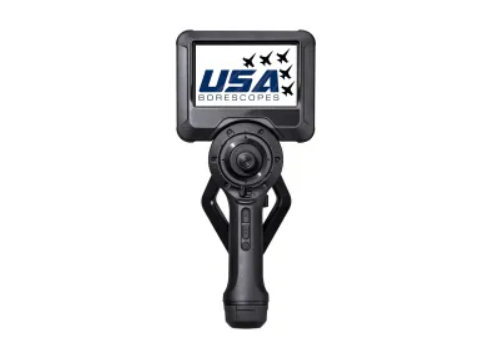
With a 3D surface model, measurement becomes more flexible and more defensible. Common measurement capabilities typically include:
- Point-to-point distance: The straight-line distance between two selected points.
- Depth/step height: How deep a pit is relative to surrounding material, or the height difference across a feature.
- Area measurement: The size of a corroded patch, damaged coating region, or surface defect zone.
- Profiles and contour checks: A view of how a surface changes across a line; useful for characterizing wear patterns or geometry shifts.
In practical terms, 3D measurement helps answer questions like:
- Is this defect shallow enough to monitor, or is it trending toward a repair threshold?
- Is the damage localized or spread across an area that suggests a broader issue?
- Can different technicians capture consistent measurements on the same feature?
For teams planning a measurement-driven workflow, it can also help to compare inspection options and how they align with reporting needs. Browsing the inspection systems and accessories on the USA Borescopes products page is a straightforward way to start narrowing the field.
Why 3D Is Especially Useful for Engine Inspections
Engines are one of the most demanding environments for borescope measurement, especially turbines and other high-performance rotating equipment. Surfaces are curved, reflective, and often difficult to illuminate evenly. Defects can be small but critical, and the consequences of misjudging severity can be significant.
3D measurement videoscopes can be particularly helpful in a few engine-related scenarios:
- Curved geometry where perspective is misleading
A pit or nick can look dramatically different depending on the angle. Depth-aware measurement helps reduce that uncertainty. - Documentation for trending and decision-making
If the goal is to monitor a feature over time, a measurement-based record is often more useful than a collection of photos from slightly different viewpoints. - Communicating findings across teams
When findings need to be reviewed by supervisors, engineers, customers, or compliance stakeholders, a model-backed measurement can make the why behind a decision easier to understand. - Complex surfaces with multiple defect types
In the real world, defects don’t appear one at a time. You may be dealing with pitting, erosion, and coating distress in the same region. A 3D representation can add clarity about what’s happening where.
If you want examples of where measurement capabilities show up across real inspections, not just in engines, take a look at the use cases on the USA Borescopes applications page. It helps frame what 3D measurement looks like in day-to-day maintenance, not just in specs.
Best Practices for More Reliable 3D Measurements
3D measurement is powerful, but it’s also sensitive to technique. These practical habits can improve repeatability and reduce “why does this measurement look off?” moments.
Stay in the effective measurement range.
Most measurement errors come from working outside the system’s ideal distance. If the scope is too close, the surface may be out of focus or overly distorted. If it’s too far, small defects can become hard to define precisely. When in doubt, take multiple captures at slightly different distances within the recommended range and compare results.
Control glare and lighting
Reflective engine surfaces can create hotspots and wash out edges. Adjust illumination, change the viewing angle slightly, and avoid overexposure when possible. Clean optics matter here too; smudges and debris don’t just reduce image quality; they can interfere with feature detection.
Stabilize the probe before capturing.
Even small movements can affect 3D reconstruction. Use articulation to lock in a stable view, then freeze the frame. If your workflow allows it, capture more than one dataset for critical findings.
Use repeatable reference points.
When trending, consistency matters. Try to capture the same feature using a similar approach each time; similar angle, distance, and lighting settings. That’s how you get measurements that are comparable across inspections.
For organizations building a formal inspection program, service support can matter as much as the tool itself, especially when downtime or calibration-related issues can disrupt schedules. That’s why some teams also evaluate ongoing support options like rentals, repairs, and inspection assistance through the USA Borescopes services page.
Where 3D Measurement Fits in the Bigger Picture
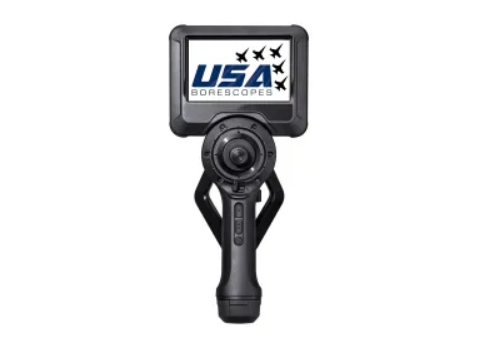
A 3D measurement videoscope isn’t always necessary. If your primary goal is quick visual confirmation (for example, finding obvious foreign object damage or verifying a basic condition), a standard videoscope may be enough.
But if you need to:
- quantify defect size confidently,
- document findings for review,
- trend change over time,
- or reduce subjectivity in inspection decisions,
then 3D measurement becomes a meaningful upgrade.
It also helps to evaluate the tool through the lens of your environment. A field-heavy workflow may prioritize ruggedness, probe control, and fast reporting. A shop environment may emphasize measurement depth capability, storage, and documentation consistency. If you’re mapping these needs by sector, the overview on the USA Borescopes industries page can help clarify what features tend to matter most in different inspection settings.
3D measurement videoscopes turn internal inspections into something more than a visual check. By capturing depth-aware data and building a usable digital surface model, they help technicians measure defects more consistently, communicate findings more clearly, and document inspections in a way that supports real decisions, especially in demanding engine environments.
For teams exploring measurement solutions, USA Borescopes is a practical resource for evaluating 3D measurement videoscopes, understanding which features fit specific inspection goals, and supporting the equipment once it’s in use. To discuss your application, compare options, or get help building the right inspection setup, the next step is to contact them today.
About The Author
The author is a technical specialist with hands-on experience in advanced inspection systems, including 3D measurement technologies. Their work focuses on translating complex imaging and measurement concepts into practical guidance for technicians and maintenance teams working in demanding inspection environments.

Recent Comments