

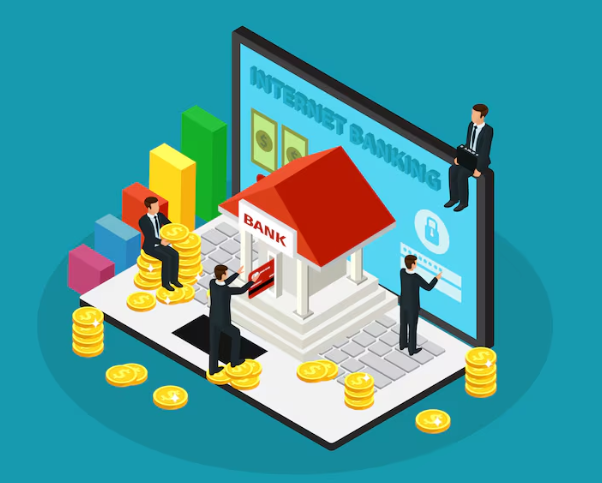
The focus of the financial revolution is in Indonesia. Digital banking and fintech products are making a huge difference as millions of individuals across the archipelago access, manage, and utilise money in very different ways. It is opening up new avenues for financial inclusion that were previously unavailable through traditional banking.
Because of its distinct terrain and population, the nation has a distinct approach to digital finance. In rural communities, physical bank branches were not accessible. Even opening a basic account requires a lot of paperwork and several visits. Due to their residential location, many Indonesians were still not able to use formal banking services.
Mostly accessed using mobile devices
The digital banking Indonesia has significantly altered this reality. Financial services can now be accessed primarily through mobile devices. Individuals in isolated communities can now use their smartphones to acquire credit, make money transfers, and open accounts. Since the change addressed actual issues for actual people, it occurred swiftly.
The data provides a powerful narrative. In 2024, the financial inclusion index for Indonesia was almost 75%, which means that millions of people had their first experience with formal financial services. The main cause of this advancement is the digital advances that opened up banking to previously underserved groups.
Technological Improvement
The use of Quick Response Code technology has spread throughout the nation. In traditional markets, small retailers now take digital payments in addition to cash. The technology is easy to use and doesn’t require costly equipment, which is why this move occurred. It only needs a smartphone and an internet connection to begin taking digital payments.
Indonesia provides fintech solutions that creatively address particular local demands. People who have money to lend and those who need credit are connected by peer-to-peer lending services. By evaluating creditworthiness using other data sources, these platforms make loans available to those without conventional credit histories. Funding is available to small business owners without the drawn-out procedures and collateral needed by traditional banks.
Innovation
In order to sustain stability while fostering this expansion, the regulatory landscape has changed. Indonesian financial regulators have developed frameworks that safeguard consumers and promote innovation. Clear guidelines have been set for various fintech businesses, ranging from loan platforms to payment processors. Responsible growth and investment have been stimulated by this regulatory certainty.
This change hasn’t stopped traditional banks from moving forward. Many have created their digital solutions or teamed up with fintech firms. With features that compete with stand-alone fintech solutions, they have developed mobile banking apps. Going one step further, some have created entirely digital subsidiaries that function without physical branches.
For consumers, the competition between emerging fintech firms and traditional banks has been advantageous. While the cost of basic utilities has gone down, interest rates on savings have gone up. The speed of transactions has significantly increased. It takes seconds now instead of days.
As digital services grow, financial education is becoming more and more important. There is educational content on many sites to aid users in comprehending financial concepts. They offer savings and budgeting options. They also provide retirement planning and investment guidance.
Less expensive and more convenient
Small and medium sized businesses have been particularly affected. It used to be difficult for these companies to get financing and other financial services. To determine credit, digital lending platforms increasingly consider their transaction histories and cash flows.
Payments across borders have also significantly improved. Foreign-based Indonesian employees can send money home more affordably and conveniently. This effectiveness promotes commerce and economic expansion.
These services’ underlying technology architecture is always changing. In order to improve the nation’s retail payment system, a new real-time retail payment service was introduced in December 2021. It provides dependable, quick, and reasonably priced payment options. This basis makes it possible for even more advanced financial services to appear.
AI aids in automated customer support, financial product personalization, and fraudulent transaction detection. Spending trends are examined by machine learning algorithms to provide pertinent financial guidance. Financial services are now more user-friendly and safe thanks to this technology.
Changes in rural regions have been particularly drastic. Communities where there were no bank branches before now have access to digital banking. Payments for crops can be made electronically to farmers. Businesses in rural areas can obtain finance to grow. Previously underprivileged places benefit from this financial inclusion by seeing economic growth.
New Business Prospects
The combination of online banking and online shopping has opened up new business prospects. Merchants on online marketplaces may be able to access integrated financial services. Based on their past sales, sellers are eligible to apply for a loan. Purchasers might choose to pay in installments. E-commerce is made easier to access, and business expansion is supported by this integration.
With the growth of digital services, consumer protection has become more and more significant. Regulations now demand that fees and terms be disclosed clearly. Dispute resolution procedures have been put in place. Standards for protecting data have been put into place.
Much of this adoption is being driven by young Indonesians. Having grown up with smartphones, they anticipate experiences that are digitally first. They believe traditional banking is overly complicated and feel more at ease handling their money through applications. The way financial services develop is being influenced by their tastes.
The fintech solutions Indonesia success, investment, and attention from around the world have drawn attention to Indonesia. Local businesses are collaborating with multinational IT corporations to break into the market. This infusion of finance and experience boosts service quality and speeds up innovation.
Conclusion
In the future, it will be harder to distinguish between various financial services. Investment items can be found on payment applications. Lending platforms offer insurance. Numerous options for financial planning are offered by digital banks. Users benefit more from this convergence since it makes their financial lives easier.
Technology may solve actual social and economic problems, as seen by the development of Indonesia’s financial industry. Digital banking and fintech have increased the relevance and accessibility of financial services to the needs of people and enhanced their efficiency. The development assists individuals, businesses, and the economy in general. New technologies and techniques are continuously being invented in order to provide the Indonesian dynamic and diverse population.

Recent Comments