

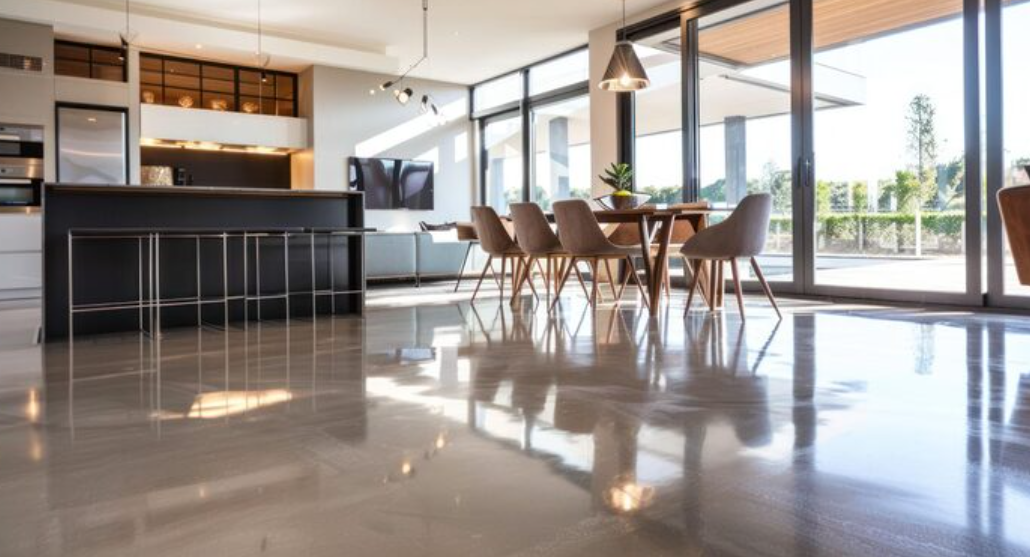
Concrete floors are known for their strength and durability, but over time they may develop cracks, discoloration, or surface wear. Instead of replacing the entire slab, many property owners look for methods that restore both function and appearance. One common solution is concrete resurfacing, a process that renews damaged surfaces without removing the original concrete. Another popular option is stained concrete floors, which add color and decorative finishes to existing slabs. Understanding how these two approaches work can help property owners improve the look and performance of their concrete flooring.
Understanding Concrete Resurfacing
Concrete resurfacing is a process used to repair and restore worn or damaged concrete surfaces. Instead of replacing the entire slab, contractors apply a new overlay that bonds to the existing concrete. This layer helps cover cracks, surface imperfections, and discoloration while improving the structural appearance of the floor.
The resurfacing process often includes cleaning the surface, repairing minor damage, and applying a specialized overlay mixture. Once applied, the new surface creates a smooth and refreshed concrete finish. Concrete resurfacing is commonly used in driveways, patios, commercial spaces, and interior floors that need improvement without full replacement.
What Are Stained Concrete Floors?
Stained concrete floors are created by applying specialized stains to the surface of concrete to produce decorative colors and patterns. These stains react with the minerals in the concrete, creating unique tones and natural-looking textures.
Unlike paint or coatings that sit on top of the surface, stains penetrate the concrete and become part of the floor itself. This process produces a long-lasting finish that will not easily peel or chip. Stained concrete floors are often used in residential interiors, restaurants, retail stores, and showrooms where both durability and visual appeal are important.
Benefits of Concrete Resurfacing
Concrete resurfacing offers several advantages for property owners who want to improve aging concrete without extensive demolition.
Key benefits include:
- Restores worn or damaged concrete surfaces
- Covers cracks and surface imperfections
- Extends the lifespan of existing concrete floors
- Provides a fresh and uniform appearance
- More cost-effective than full concrete replacement
Because resurfacing works with the existing slab, it can be completed faster and with less disruption compared with installing new concrete.
Advantages of Stained Concrete Floors
Stained concrete floors provide both decorative style and durable performance for various environments.
Important advantages include:
- Unique color variations and decorative effects
- Long-lasting finish that penetrates the concrete surface
- Low maintenance compared with many flooring materials
- Suitable for both residential and commercial interiors
- Enhances the natural texture and character of concrete
These benefits make stained concrete flooring a popular choice for property owners seeking modern and visually distinctive surfaces.
Choosing the Right Concrete Improvement Method
The best approach for improving a concrete floor often depends on its current condition and the desired final appearance. Concrete resurfacing is typically chosen when the surface has visible damage or uneven areas that need repair. This method helps restore the floor before any decorative finishes are applied.
In contrast, stained concrete floors are often selected when the goal is to enhance the visual design of the space. Staining can transform a simple concrete slab into a decorative surface that complements modern interiors.
Maintaining Decorative Concrete Floors
Maintaining decorative concrete floors helps preserve their appearance and durability. Routine cleaning with a soft mop or gentle cleaning solution can remove dust and debris from the surface. Periodic sealing may also help protect the floor from stains and moisture.
Regular inspections allow property owners to identify small surface issues before they become larger problems. With proper maintenance, both resurfaced concrete and stained concrete floors can maintain their appearance and performance for many years.
Conclusion
Concrete floors can be improved in many ways without replacing the entire slab. Concrete resurfacing provides an effective method for repairing damaged surfaces and restoring structural appearance. At the same time, stained concrete floors offer decorative finishes that enhance the natural beauty of concrete. Each approach serves a different purpose depending on the condition of the floor and the desired design outcome. By understanding these solutions, property owners can choose the method that best supports durability, aesthetics, and long-term flooring performance.

Recent Comments